 |
| |
 |
|
| 3D Anatomy for MSK Ultrasound: Lower Limb
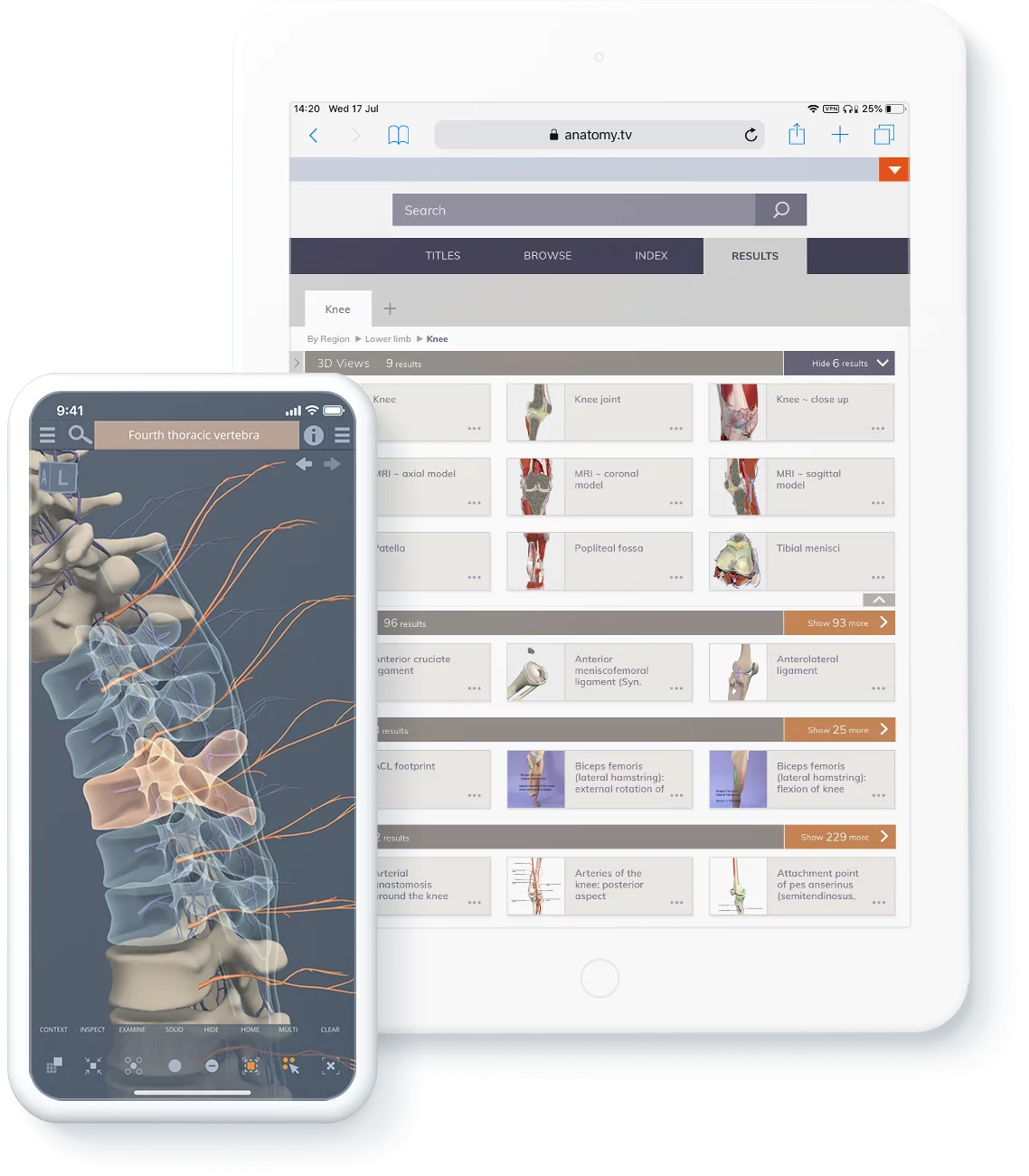
Interact with the 3D anatomy atlas of the lower limb, including the hip, knee, ankle and foot.
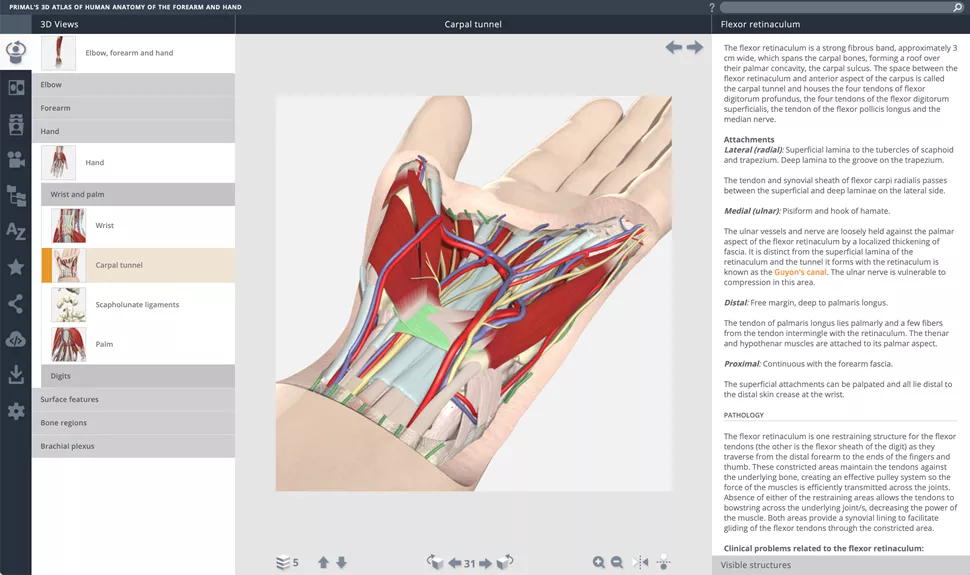
All structures have accompanying text – ideal as a quick reference and atlas. |
|
|
| |
This detailed and accurate title has been designed to provide a guide to the interpretation of lower limb ultrasound aimed at any specialist using - or training to use - ultrasound for diagnosis of MSK conditions and injuries.
Our musculoskeletal 3D images have been linked to ultrasound scans to aid interpretation of anatomy, orientation and diagnosis.
Clinical content provides access to a library of examples to help diagnose a selection of commonly presenting conditions of the lower extremities.
Interact with the 3D anatomy atlas of the lower limb, including the hip, knee, ankle and foot. The easy to use functions allow you to peel away layers of anatomy from skin to bone and rotate the model 360 degrees and view and identify any anatomical structure. All structures have accompanying text – ideal as a quick reference and atlas. |
|
|
| |
|
|
Non-EU Customers 10 Day Shipping
(US,
Canada, Australia, Asia, Rest of World)
|
|
|
Non-EU Customers 3-Day Shipping
(US,
Canada, Australia, Asia, Rest of World)
|
|
|
EU Residents 10 Day Shipping
(All
EU Residents except Switzerland)
|
|
|
EU Residents 3-Day Shipping
(All
EU Residents except Switzerland)
|
|
|
| |
|
- Clear graphics and interactive anatomy views
- Interpret MRI scans more easily
- Peel away layers of anatomy from skin to bone and rotate and zoom the 3D model at any stage
- An easy to use interface and functionality
- Search and help function
|
|
An extensive and interactive 3D anatomy atlas for the lower limb provides a comprehensive range of fully labelled views of the hip, knee, ankle and foot. Every visible structure is labelled and interactive functions allow the user to add or remove anatomy in layers to reveal deep and superficial structures. Each view can be rotated or tipped to view structures and understand their position and relationships more easily.
The superb interactive imaging section allows the user to compare the labelled cross sectional anatomy with comparable ultrasound scans and MRIs in a variety of planes and slices.
The position of the ultrasound probe is indicated on the anatomy cross section and is linked to the correlating ultrasound image which shows in the right viewing panel. Key structures are labelled on the cross sections and on the corresponding ultrasound image. Clicking on the probe position will link to text covering correct technique and examples of commonly presenting conditions for the structures scanned using that probe position.
Users can correlate the 3D cross sections with labelled MRI scans in the axial, coronal and sagittal planes. |
|
The extensive clinical topics section covers technique and includes many clinical examples linked to scans, slides, photographs and illustrations. More than 50 clinical topics are included - bursitis, tendon tears and ruptures, muscle tears, fractures, cysts and many more commonly presenting conditions and injuries. |